
Ash Dieback Specialists North Wales
Advanced Ash Dieback Requires Specialist Equipment
Ash dieback (also known as Chalara ash dieback) has made many mature ash trees structurally unsound. Current industry best practice is to avoid climbing affected trees wherever possible, using MEWPs or mechanical handling to remove them safely instead.
Why Mechanical Access Matters
For many years, climbing was the standard method of dismantling trees. However, the widespread impact of ash dieback has changed the way many dangerous ash trees are approached.
Industry guidance now places much greater emphasis on assessing whether climbing is appropriate. Where advanced ash dieback has significantly weakened a tree, mechanical access such as a MEWP is often the preferred method, allowing work to be carried out from a secure platform rather than from potentially compromised branches.
By investing in specialist access equipment, we're able to undertake many dangerous ash removals more safely and efficiently while reducing risk to both our team and the public.
MEWP Access
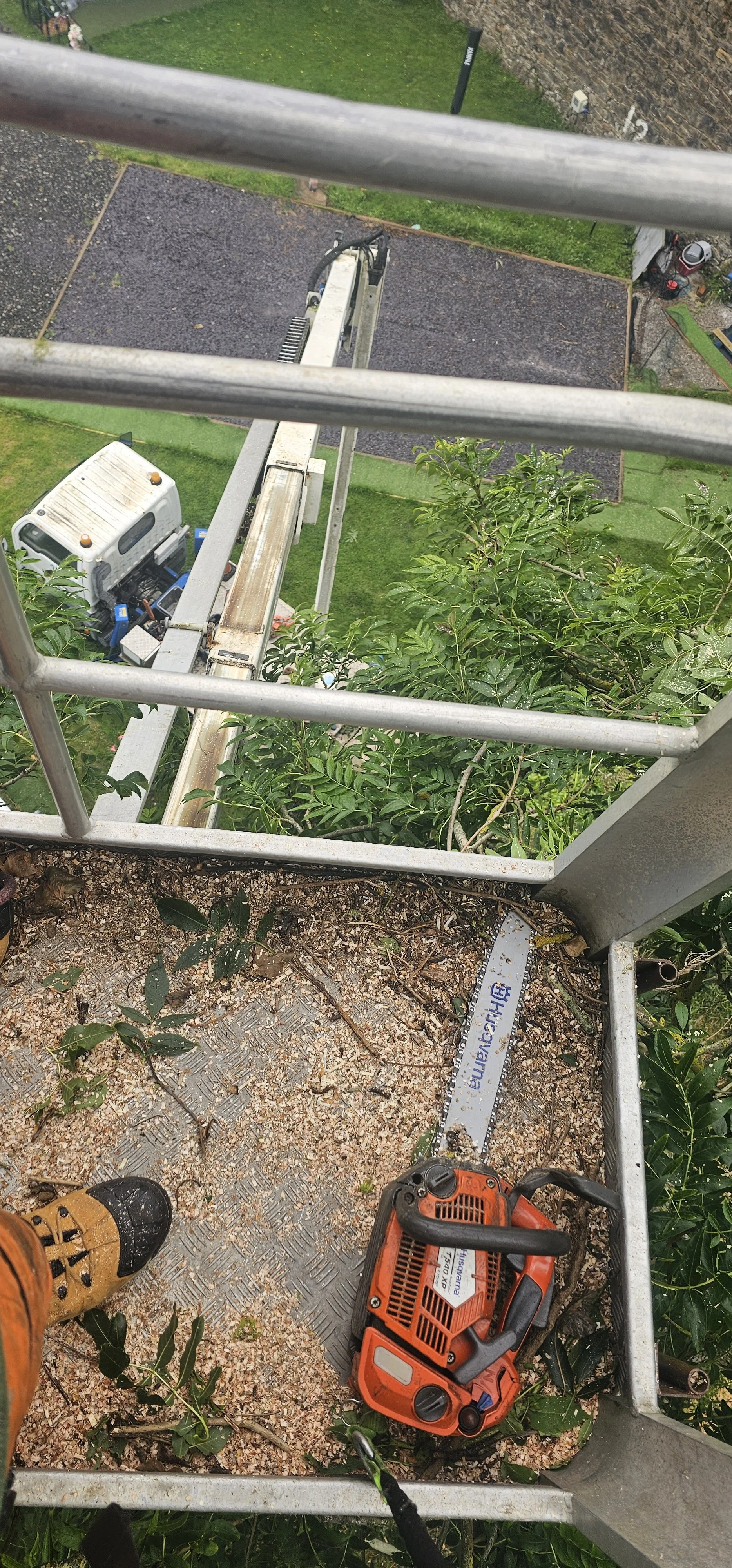
Our 21-metre CELA access platform allows dangerous ash trees to be dismantled from a secure working platform, significantly reducing the need to rely on compromised branches for access.
Crane-Assisted Dismantling
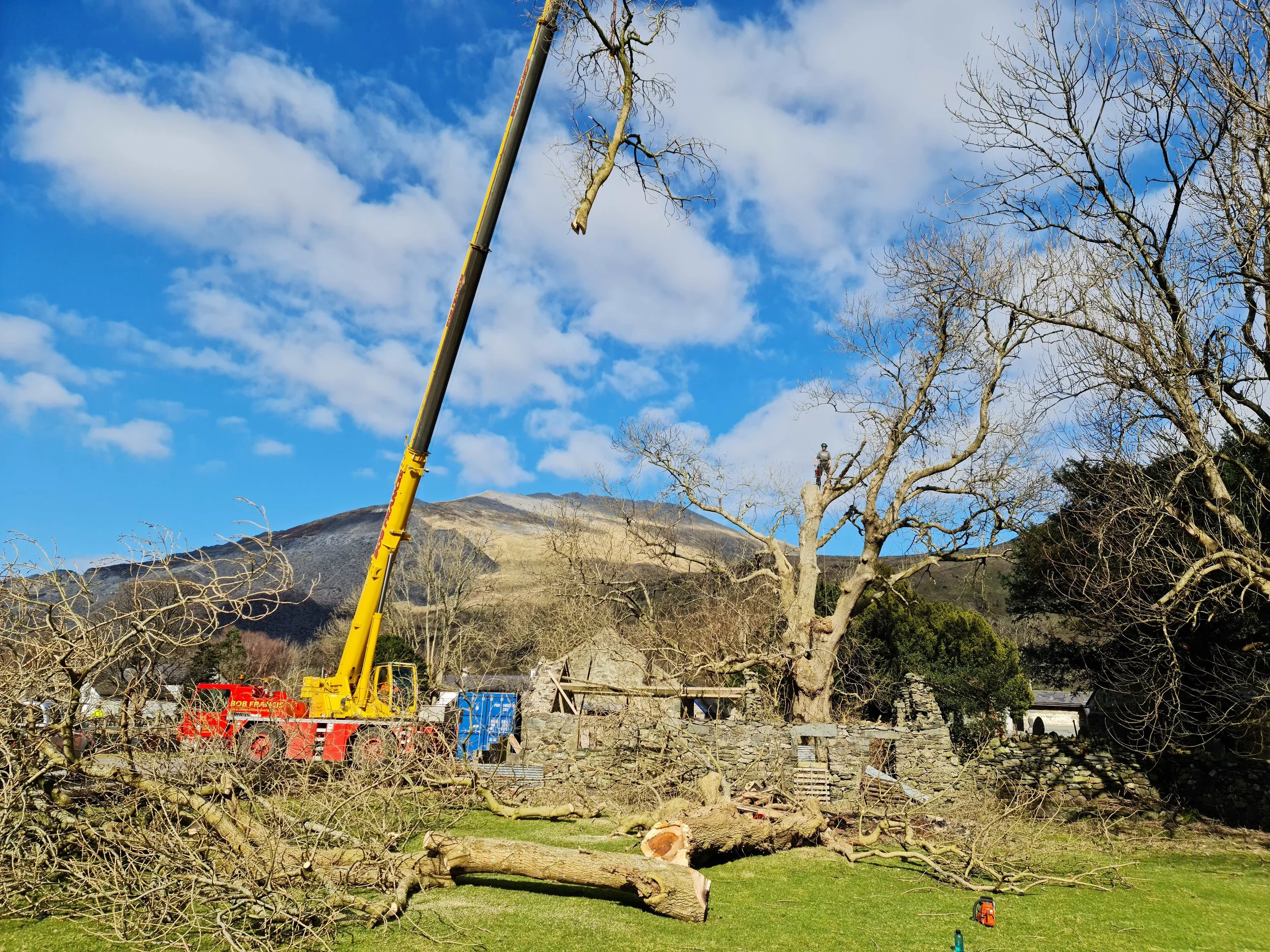
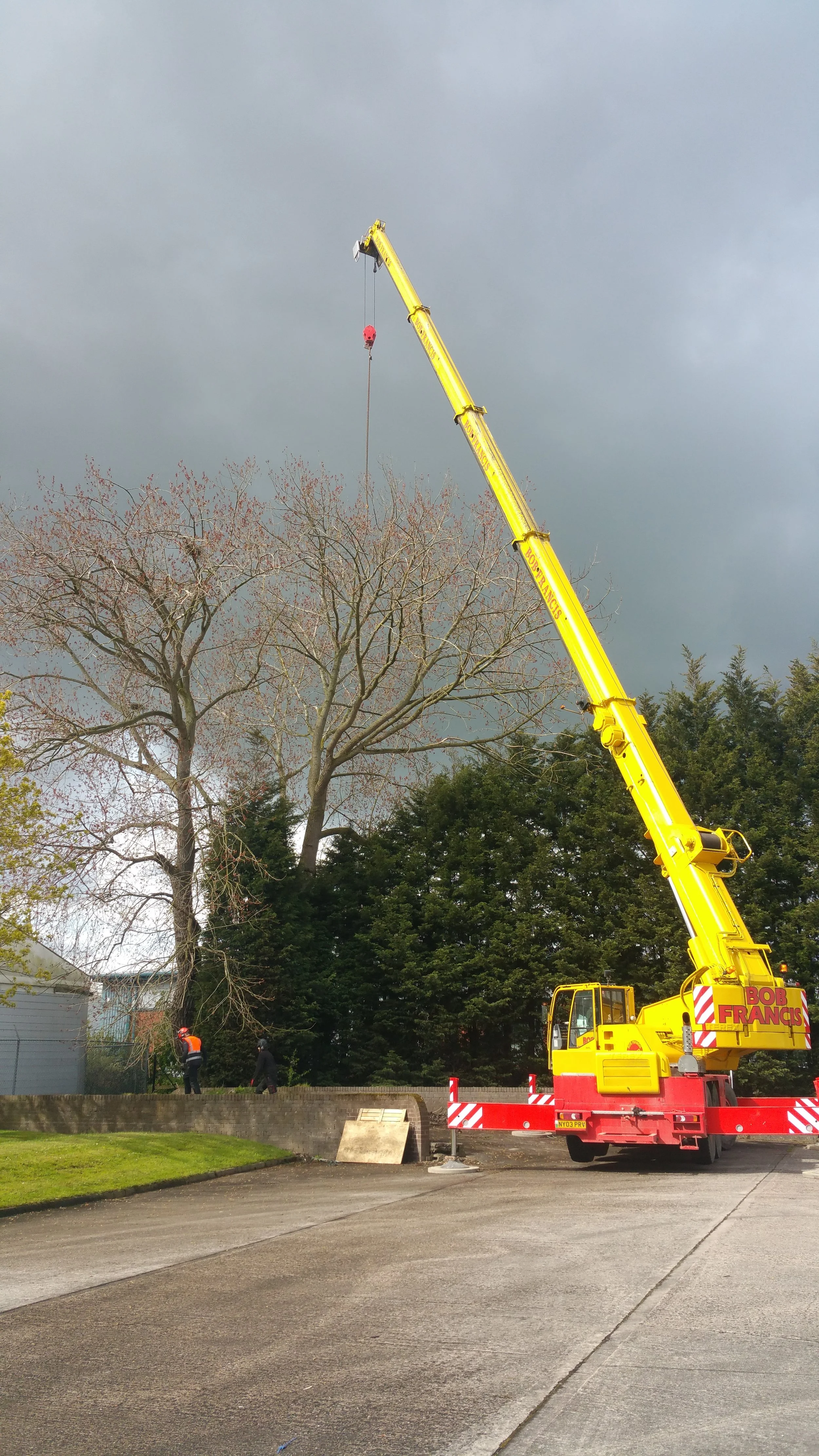
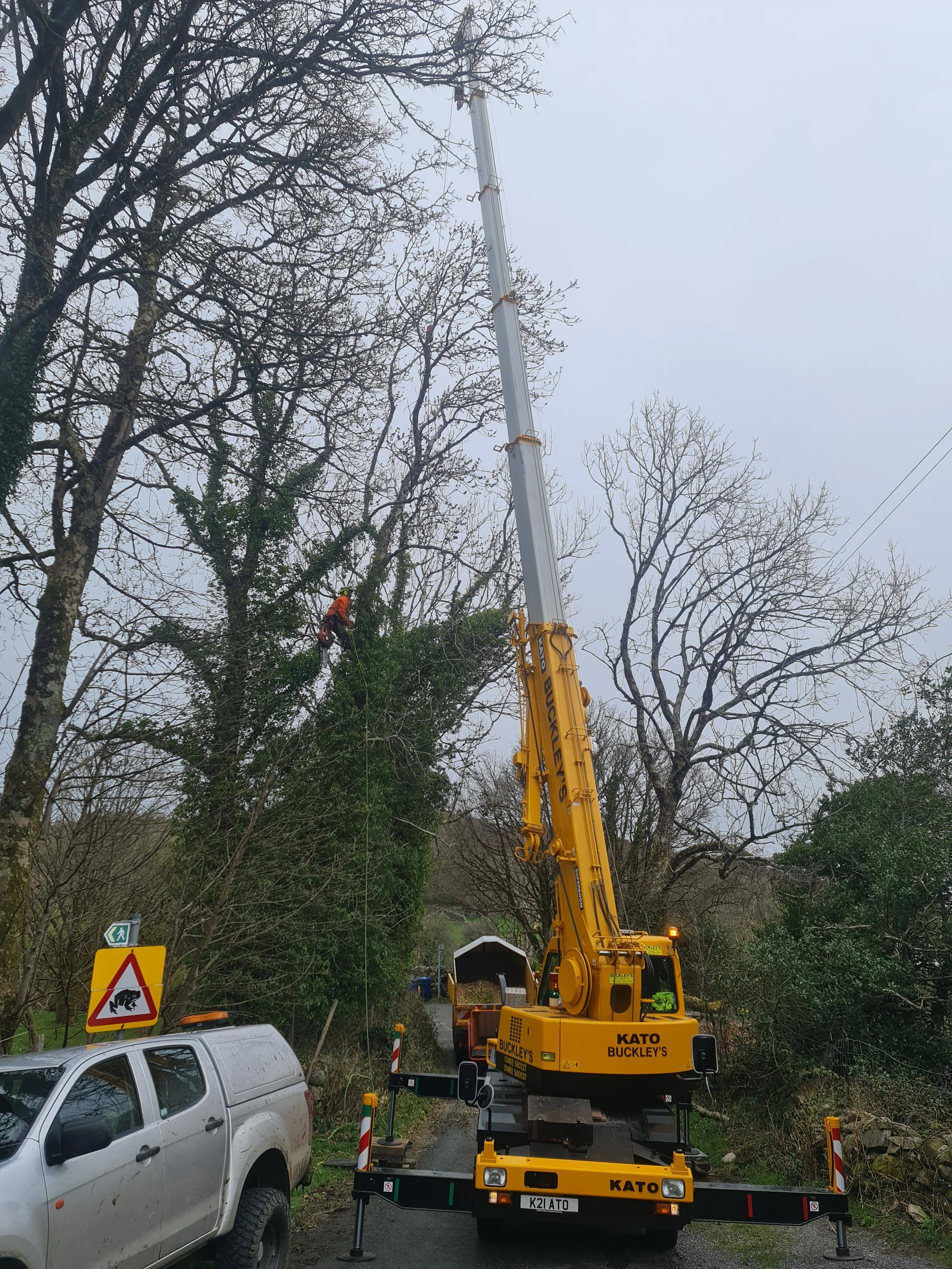
Where large sections need to be removed over property, roads or gardens, our specialist crane truck enables timber to be lifted clear in controlled sections, reducing loading on the remaining tree and improving safety.
Mechanical Handling
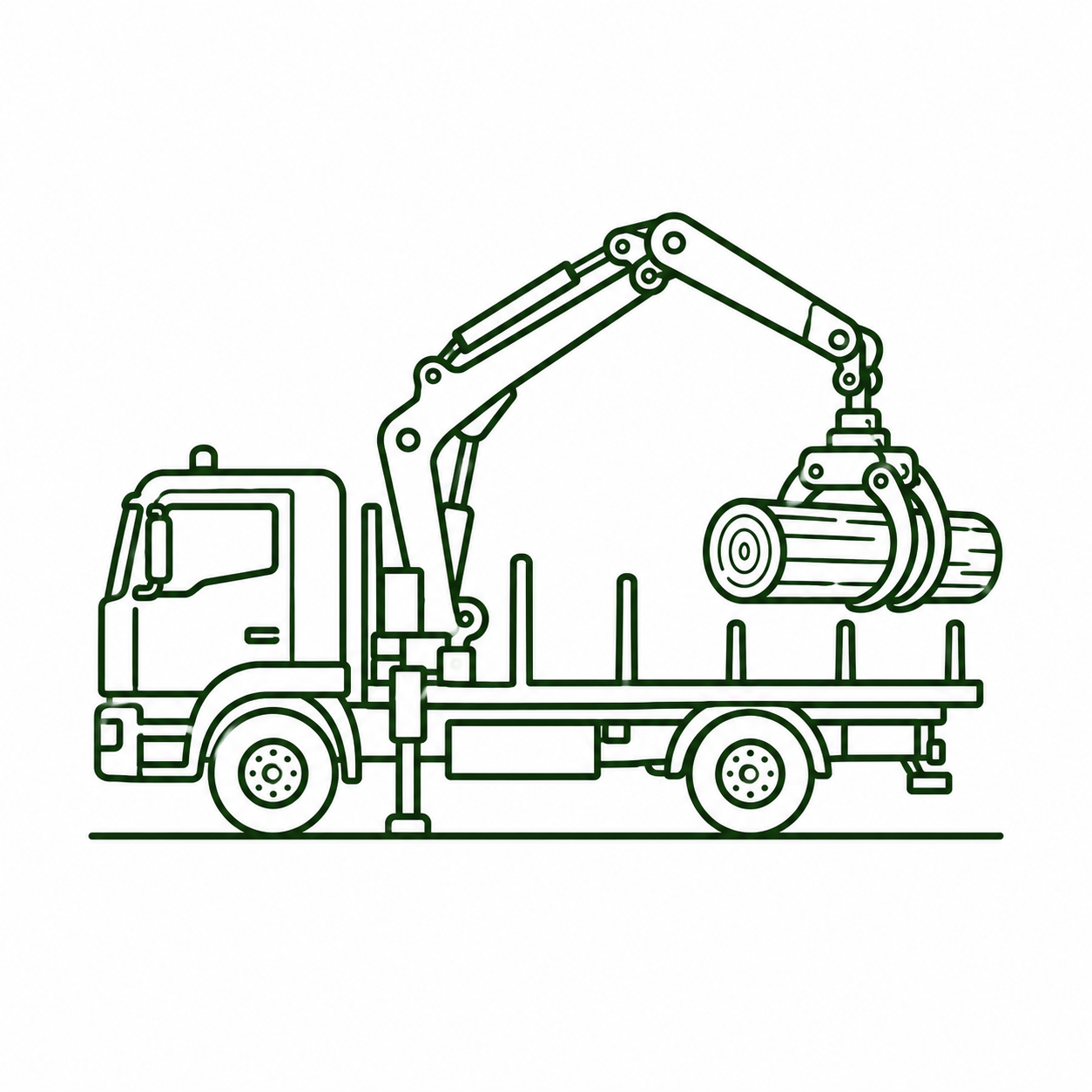
Heavy timber is moved using purpose-built machinery, minimising manual handling and allowing sites to be cleared efficiently.
Specialist Risk Assessment
Every ash tree is different.
We assess the extent of decay, surrounding hazards and access constraints before selecting the safest and most appropriate method of work.